
Essay Read by Constituting America Founder, Actress Janine Turner
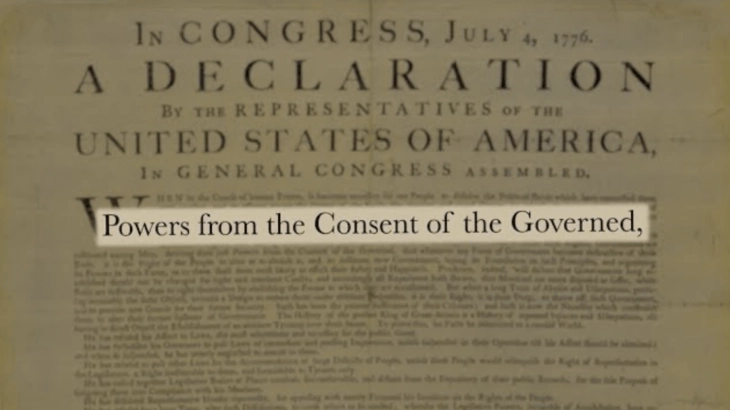
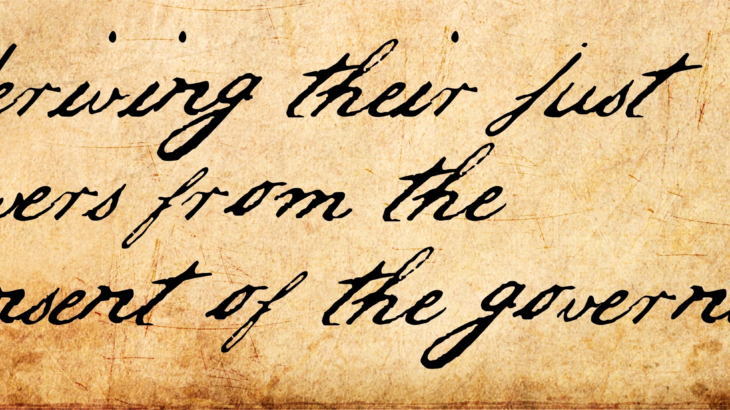
The Declaration of Independence affirms that governments derive “their just powers from the consent of the governed.” This principle is often understood in terms of elections and representation, but it rests on a more fundamental requirement: the people must possess sufficient knowledge of the conditions under which they live to give meaningful consent. Where information is obscured, incomplete, or inaccessible, consent becomes attenuated—reduced to form rather than substance. In the early twentieth century, Upton Sinclair played a pivotal role in exposing conditions that were largely hidden from public view. While Sinclair’s work helped catalyze public demand for government action, the long-term preservation of self-rule required mechanisms—such as the notice-and-comment process—that transform public reaction into disciplined, informed consent.
At its core, self-government depends upon an informed citizenry. Individuals must be able to assess risks, evaluate the actions of institutions, and make choices—both political and economic—based on reasonably accurate information. Without such awareness, participation in markets and in governance becomes compromised. Consumers cannot make informed decisions, and voters cannot meaningfully judge the actions of those in power. In this sense, transparency is not merely a desirable feature of a free society; it is an essential condition for the exercise of liberty.
The rapid industrialization of the late nineteenth and early twentieth centuries created new challenges for this principle. As production became more complex and geographically concentrated, the distance between producer and consumer widened. Goods were no longer made in small, visible settings, but in large, often opaque industrial facilities. This transformation brought significant economic benefits, but it also introduced a profound information asymmetry. Consumers, increasingly removed from the processes that produced the goods they purchased, had little ability to observe or evaluate the conditions under which those goods were made.
This gap in knowledge created a corresponding gap in consent. Individuals were participating in an economic system whose inner workings were largely invisible to them. They could not easily determine whether products were safe, whether production methods were sanitary, or whether risks were being managed responsibly. In such an environment, the ability of the public to exercise informed judgment—whether through purchasing decisions or political action—was significantly constrained.
Sinclair’s own life helped shape his sensitivity to these problems. Born in Baltimore in 1878, he experienced both poverty through his father’s unstable circumstances and relative affluence through visits with his mother’s prosperous family. Moving to New York while still young, he supported himself by writing while attending the City College of New York and later studying at Columbia University. These experiences exposed him to stark economic contrasts and reinforced his conviction that ordinary Americans often lacked the information necessary to understand the institutions shaping their lives.
It was into this context that Upton Sinclair undertook his work. By the early twentieth century, Sinclair had already established himself as a prolific young writer whose growing interest in social reform led him to investigate the conditions faced by industrial workers firsthand. Rather than relying solely on secondhand accounts, he immersed himself in the environments he sought to describe, believing that careful observation was essential to exposing realities the broader public could not otherwise see.
Sinclair was not a regulator, nor was he a policymaker. He was, rather, an investigator and a writer who sought to bring hidden conditions into the public eye. His efforts were marked by persistence and a willingness to immerse himself in environments that many would have preferred to ignore. By documenting the realities of industrial food production, Sinclair aimed to reveal aspects of the modern economy that had remained largely concealed from the public.
Sinclair spent weeks working undercover and conducting extensive research in Chicago’s meatpacking district before writing The Jungle, seeking to ground his fictional narrative in careful observation of actual industrial conditions. The publication of The Jungle brought these conditions to widespread attention. Readers were confronted with vivid descriptions of practices that raised serious concerns about sanitation and safety in the production of food. The reaction was swift and intense. Public awareness gave way to public alarm, and public alarm translated into political pressure. Citizens demanded that their government respond to the conditions that had been exposed.
It is important, however, to understand both the power and the limits of this reaction. Sinclair himself famously remarked that he had aimed at the public’s heart and hit it in the stomach. The emotional force of his writing galvanized attention, but it also underscored a key reality: public reaction, while powerful, is not always precise. Emotional responses can amplify concerns, but they do not necessarily provide a clear or balanced foundation for policy. Outrage can identify a problem, but it does not, on its own, produce well-calibrated solutions.
Nevertheless, the exposure of these conditions marked a turning point. Public awareness made inaction untenable, and the federal government responded with new measures aimed at ensuring food safety. These developments were part of a broader period of regulatory expansion in the United States, in which growing complexity and public demand led to the creation of new institutions and frameworks for oversight. Sinclair’s work did not dictate the specific contours of these policies, but it played a critical role in bringing the underlying issues to light.
At this juncture, a distinction becomes essential. There is a meaningful difference between public reaction and public consent. Reaction is immediate and often emotional; consent, in the context of a republic, must be more deliberate and informed. If policy is driven solely by reaction, it risks being shaped by incomplete information or transient pressures. For self-government to function effectively, there must be mechanisms that allow public concerns to be expressed, examined, and refined.
This is where the development of structured processes for public participation becomes significant. In the decades following the initial wave of regulatory expansion, the United States established formal procedures to guide how regulations are developed and implemented. Among the most important of these is the notice-and-comment process, through which agencies propose rules, invite input from the public, and are required to consider and respond to that input before finalizing their decisions.
The notice-and-comment process serves several critical functions. It creates an opportunity for citizens, businesses, and other stakeholders to provide information, raise concerns, and offer recommendations. It requires agencies to engage with these contributions, fostering a level of transparency and accountability that strengthens the legitimacy of regulatory actions. Importantly, it also helps to distinguish between different types of input. Public comments may range from highly technical analyses to expressions of personal concern or broad statements of opinion. The process does not eliminate this diversity, but it channels it into a structured framework where it can be evaluated more systematically.
In this sense, notice-and-comment can be understood as an institutionalization of consent. It does not replace the role of elected representatives, nor does it guarantee perfect outcomes. What it does is provide a mechanism through which public reaction can be transformed into more disciplined, informed participation. It encourages the submission of evidence, the articulation of reasoning, and the consideration of competing perspectives. In doing so, it helps ensure that regulatory decisions are not merely responses to momentary pressures, but are grounded in a broader and more deliberate engagement with the public.
Seen in this light, Sinclair’s contribution takes on a particular significance. His work helped initiate a process by which hidden conditions were brought into public awareness. That awareness, in turn, generated the demand for action. But the preservation of self-rule required more than exposure; it required the development of processes that could translate awareness into informed decision-making. Sinclair helped make consent possible by illuminating what had been concealed. Processes like notice-and-comment help make that consent meaningful by structuring how the public’s voice is incorporated into governance.
This balance remains essential. Too little opportunity for public input risks technocratic decision-making that is disconnected from the concerns of the people. Too much reliance on unstructured reaction risks policies that are unstable or poorly calibrated. A functioning republic must navigate between these extremes, ensuring both that the public is heard and that its input is engaged in a disciplined and thoughtful manner.
The relevance of these principles extends to the present day. Modern communication technologies have dramatically increased the speed and volume of information available to the public. Issues can gain national attention almost instantaneously, and public reaction can be swift and widespread. Yet the fundamental challenge remains the same: distinguishing between reaction and informed judgment. The need for structured processes that can channel public input into effective governance is, if anything, more pressing in an age of rapid information flow.
Ultimately, the principle of consent of the governed depends not only on the ability of citizens to express their views, but on the conditions that make those views informed and meaningful. Upton Sinclair’s work stands as a reminder of the importance of exposing hidden realities and ensuring that the public is not excluded from knowledge that affects its well-being. At the same time, the evolution of processes like notice-and-comment underscores the necessity of transforming awareness into structured participation.
The enduring lesson is that self-government requires both the awakening of public concern and the institutions that refine that concern into informed consent. Sinclair helped bring the former into being. The development of procedural frameworks for public input has made the latter possible. Together, they illustrate how a republic can move from reaction to reasoned self-rule, preserving the principle that government ultimately derives its authority from a people that is both informed and engaged.
 Andrew is a seasoned broadcaster and public policy professional with more than 15 years of experience in radio, television and online media, and more than three decades in public policy. Currently, he serves as Director of the Center for Regulatory Freedom at the CPAC Foundation, as well as the Executive Director of the Coalition Against Socialized Medicine, drawing from his more than three decades in public policy and politics in those roles.
Since 2011, he has worked as a talk radio host, filling in for nationally-syndicated and major-market radio shows, like WMAL in Washington, DC. In addition to his radio work, he hosts several podcasts, including the Federal Newswires “Lunch Hour” podcast and “Andrew and Jerry Save the World.”He has been named one of Maryland’s top political influencers, has testified before Congress on regulatory issues more than two dozen times and in state legislatures around the country. A graduate of William & Mary with a degree in international relations, he holds a Masters in Public Administration from Troy University. He has also taught regulatory policy at the university level.
Click here to receive our Daily 90-Day Study Essay emailed directly to your inbox.
Click here for the essay schedule with today’s essay and previously published essays hyperlinked.

 Amanda Hughes is author of Who Wants to Be Free? on faith, freedom and the importance of voting, and a writer for HillFaith.org. She is a story contributor for the anthologies Loving Moments and Moments with Billy Graham. She was honored to serve as editor for her father’s book of life stories, Adventures, Wit & Wisdom: The Life & Times of Charlie Hughes. Amanda formerly served as 90-Day Study Director for Constituting America. She received her B.A. from Texas State University and M.A. from Southwestern Baptist Theological Seminary.
 Jim Pinkerton was born in Cambridge, Massachusetts, and serves as a Senior Fellow in the Center for American Prosperity at the America First Policy Institute. He worked in the Domestic Policy Office at the White House under presidents Ronald Reagan and George H.W. Bush and in their 1980, 1984, 1988, and 1992 presidential campaigns. In 2008, he served as a senior adviser to Mike Huckabee’s presidential campaign.
 Caleb Franz has served as Program Manager at Young Voices since 2021 and is a scholar with the Bluegrass Institute. He’s also the author of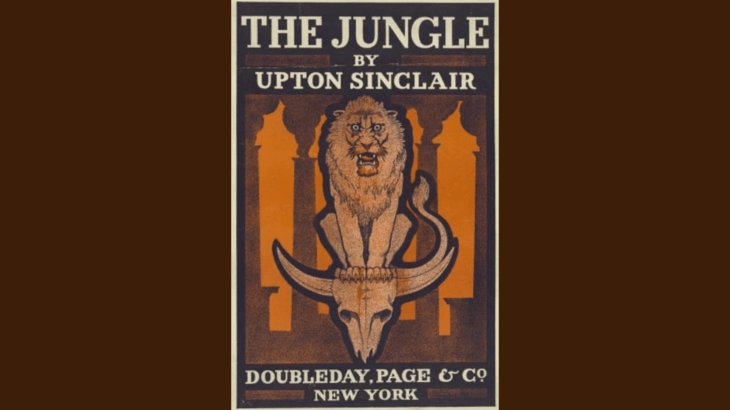
 Peter Roff is a contributing editor at Newsweek and a Senior Fellow at several Washington-based public policy organizations.

 Reeve T. Bull is the Policy Director of the Fulcrum Foundation and a Senior Advisor with the Recoding America Fund. He recently finished his term as the Deputy Director of Virginia’s Office of Regulatory Management. Prior to this role, he was Research Director of the Administrative Conference of the United States. He is an elected member of the American Law Institute and a Public Member of the Administrative Conference of the United States.


 Dr. C.C. Borzilleri is a historian of women and print culture in early America. She is a Content Specialist at the Bill of Rights Institute and teaches university courses on American history and memory.
 Gary Porter is the founder and former Executive Director of the Constitution Leadership Initiative (CLI), a project to promote a better understanding of the U.S. Constitution by the American people. Gary presents talks on various Constitutional topics, writes periodic essays published on several different websites, and appears in period costume as James Madison, explaining to public and private school students “his” (i.e., Madison’s) role in the creation of the Bill of Rights and the Constitution.

 Dorothea Israel Wolfson, Ph.D, is managing director of the Hertog Foundation and former program director of the MA in Government Program at Johns Hopkins University. She is co-author with Benjamin Ginsberg of






 Libby Carty McNamee is a speaker, lawyer, and award-winning author of “Susanna’s Midnight Ride,” “Dolley Madison and the War of 1812,” and “The Union Spymistress: The Story of Elizabeth Van Lew” and their Study Guides. She is also Co-Editor of “The Epic Story of 1776” and “The Epic Story of 1777-1779.”

 James C. Clinger is an emeritus professor in the Department of Political Science and Sociology at Murray State. For many years, he was the director of the Master of Public Administration Program at Murray State. He now serves as an on-line adjunct instructor for any university willing to hire him and as a substitute teacher for the Henry County (Tennessee) School System.
 Adam Mossoff is a professor at the Antonin Scalia Law School at George Mason University. He is an expert in patent law and innovation policy, and his research has been relied on by the U.S. Supreme Court and other federal courts, as well as by officials throughout the federal government. He has been invited seven times to testify before Congress on patent policy, and he regularly speaks at federal agencies like the U.S. Patent and Trademark Office, Department of Justice, and International Trade Commission. In addition to his academic work, he has written on patent law and tech policy in the Wall Street Journal, New York Times, Forbes, STAT, and in other media. He is a director and senior fellow at several academic centers, think tanks, and policy organizations.

 Brita Horn lives on a 5th generation family ranch in a tiny town in northwestern Colorado, where she has been a volunteer fire chief for nearly two decades. She is a ranch wife, mother and grandmother who finds her deepest convictions not in institutions but in the people around her, the ones who get up early, do the hard work, and never ask for recognition. She is also the author of Drinking from a Fire Hose: 5 Essential Tools to Not Get Soaked. This essay grew out of her belief that the American story has always been carried by ordinary families doing extraordinary things.

 Scot Faulkner was the Chief Administrative Officer of the U.S. House of Representatives. Earlier, he served on the White House staff. He is Vice President of the George Washington Institute of Living Ethics at Shepherd University and the President of Friends of Harpers Ferry National Historical Park.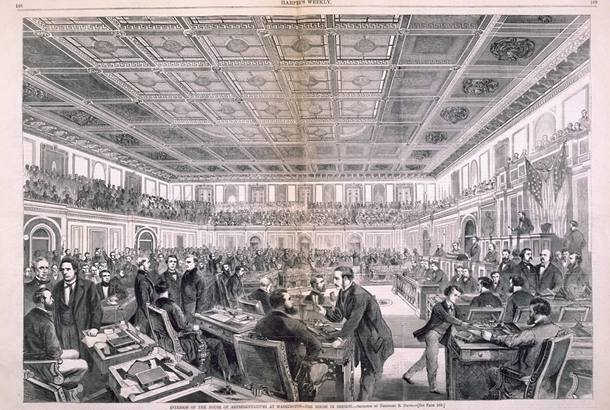
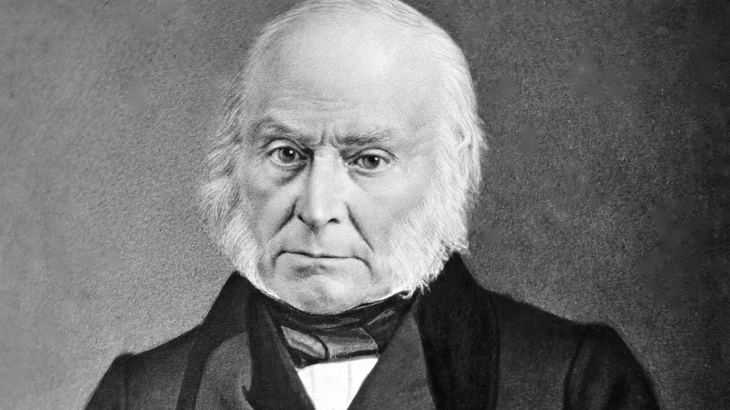
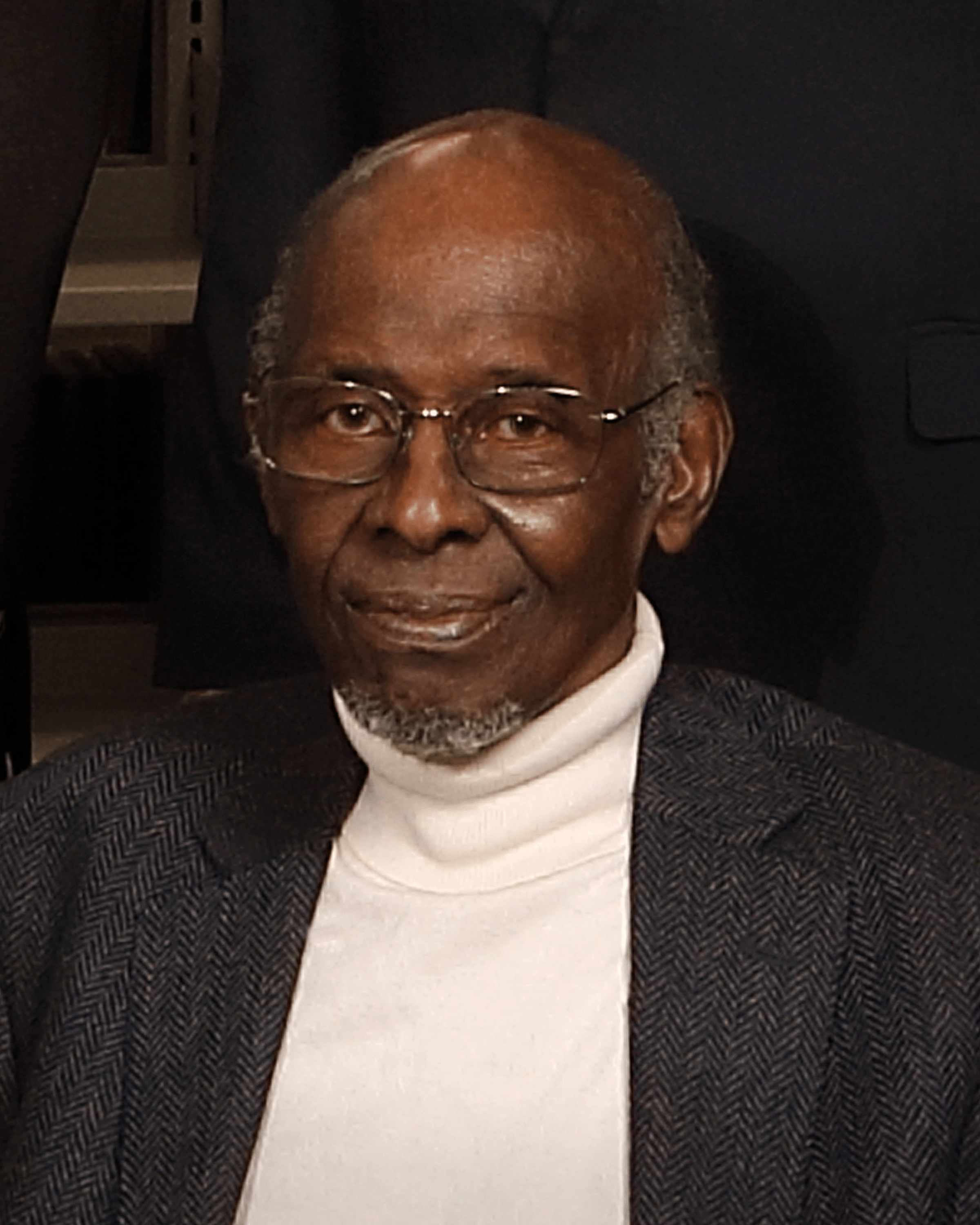 Editor of George Washington: A Collection and translator of Montesquieu’s Spirit of the Laws (with commentary).) Published (with David Zanotti) Oration: John Quincy Adams Christian America, 2025. Author of scores of scholarly essays and books, including Rethinking Uncle Tom: The Political Philosophy of H. B. Stowe and, most recently, “Three 18th Century Revolutions: British, American and French.”. Taught at Harvey Mudd College, Michigan State University, Villanova University, and University of Colorado-Boulder. l Recipient of the Bradley Prize, Le Prix Montesquieu, numerous fellowships.
 Troy Kickler was the Founding Director of the North Carolina History Project and Editor of northcarolinahistory.org. He holds an M.S. in Social Studies Education from North Carolina A&T State University and a Ph.D. in History from the University of Tennessee.
 Janine Turner
 Dr. Heather Yates is a political scientist and independent scholar who studies a variety of topics focused on American politics with specific attention given to the American Presidency, campaigns, and elections. She has authored three books, numerous book chapters, and dozens of public articles analyzing local and federal elections. Dr. Yates spent 14 years as a university professor teaching a range of topics related to American politics. Dr. Yates now applies her expertise as a researcher and writer at Ballotpedia, the digital encyclopedia of American politics.
 Dr. Jon D. Schaff is Professor of Political Science at Northern State University in Aberdeen, South Dakota, where he has taught since 2001. He teaches classes in American political thought, American political institutions, as well as politics in literature and film. He is author of multiple articles and book chapters as well as two books:
 Dr. Edward Lee is a 41year veteran of the university classroom. He has won several awards for his exemplary teaching, including a Presidential Citation in 1996 for his pioneer work with distance education. He is the author or co-author of 22 books, including 4 about America and the conflict in Vietnam. His commentary has appeared on Fox News, CNN, NBC News, and National Public Radio. He is the past president of the South Carolina Historical Association. He served as an elected official in South Carolina for 22 years, and Governor Henry McMaster awarded Dr. Lee the Order of the Palmetto last year in recognition of his service to the people of South Carolina.

 Daniel A. Cotter is Member at Aronberg Goldgehn. Dan focuses his practices in a variety of areas of corporate law and litigation, including insurance law, complex business disputes and counseling, employment law, corporate transactions, corporate governance and compliance, and cybersecurity and privacy law. Dan was an adjunct professor at UIC College of Law, fka, The John Marshall Law School, and has taught Insurance Law, Accounting for Lawyers and SCOTUS Judicial Biography. Dan graduated summa cum laude from UIC College of Law and received his B.A. in Accounting from Monmouth College, magna cum laude. Dan is a frequent writer and presenter on various topics, including the nation’s history and the Supreme Court, and in 2019, his book, “The Chief Justices,” was published.”
 Scot Faulkner was the Chief Administrative Of icer of the U.S. House of Representatives. Earlier, he served on the White House staff. He is Vice President of the George Washington Institute of Living Ethics at Shepherd University and the President of Friends of Harpers Ferry National Historical Park.
 Christopher Burkett is Associate Professor of Political Science at Ashland University and Academic Director of the Ashbrook Scholar Program and Academies. He is editor of Ashbrook’s 50 Core American Documents, and has written on the American Founding, Progressivism, and American Foreign Policy. He holds a B.A. from Ashland University, and received his Ph.D. from the University of Dallas.
 Tom Hand created Americana Corner in 2020 to share informative stories of the momentous events, significant documents and influential leaders that helped create and shape our country. Through compelling articles and captivating videos, Tom hopes to rekindle a spirit of patriotism in his fellow Americans, and remind them of our nation’s incredible past and why our founding era still matters today.
 Randolph J. May is Founder and President of The Free State Foundation, an independent, non-profit free market-oriented think tank founded in 2006. From October 1999-May 2006, Mr. May was a Senior Fellow and Director of Communications Policy Studies at The Progress & Freedom Foundation. Prior to that, he practiced communications, administrative, and regulatory law as a partner at major national law firms. From 1978 to 1981, May served as Assistant General Counsel and Associate General Counsel at the Federal Communication Commission. He has held numerous leadership positions in bar associations and professional organizations, including serving as Chair of the American Bar Association’s Section of Administrative Law and Regulatory Practice, a Fellow of the National Academy of Public Administration, and as a Public Member of the Administrative Conference of the United States. Mr. May has published more than four hundred articles and essays on communications, administrative and constitutional law topics.
 Tony Williams is a senior fellow at the Bill Of Rights Institute and a fellow for Constituting America. He is the author of seven books on the American founding, including the forthcoming “Divided Over the Declaration: How an Enduring Debate Sustains the Vision of America” with David Bobb.
 Lucas E. Morel is the John K. Boardman, Jr. Professor of Politics and head of the Politics Department at Washington and Lee University. His publications include Measuring the Man: The Writings of Frederick Douglass on Abraham Lincoln; Lincoln and the American Founding; Lincoln and Liberty: Wisdom for the Ages; and Lincoln’s Sacred Effort: Defining Religion’s Role in American Self-Government. He is a founding member of the Academic Freedom Alliance; former president of the Abraham Lincoln Institute; a consultant on exhibits at the National Archives, National Park Service, and Library of Congress; moderator of high school teacher workshops for the Jack Miller Center, Hillel-Civic Spirit, Ashbrook Center, and Gilder Lehrman Institute; and member of the U.S. Semiquincentennial Commission, which is planning the 2026 national celebration of the birth of the United States.

 Dr. Elizabeth Kaufer Busch is the Pete and Laura Walker Professor of American Studies and the Director of American Studies at Christopher Newport University.
 Kirk Higgins serves as the Vice President of Content at the Bill of Rights Institute. There, he has led several major curricula and content projects, including the Institute’s comprehensive U.S. history resource, Life, Liberty, and the Pursuit of Happiness, and comprehensive

 Dr. Jonathan Den Hartog is the Carolyn and Don Drennen Chair of American History, Civics, and the Constitution at Samford University in Birmingham, Alabama, where he is also the Chair of the History Department. He received his Ph.D. in American History from the University of Notre Dame. Den Hartog’s historical interests are in the religious and political history of the colonial, revolutionary, and early national periods of the United States. He has written the book Patriotism and Piety: Federalist Politics and Religious Struggle in the New American Nation and has co-edited the book Disestablishment and Religious Dissent: Church-State Relations in the New American States, 1776-1833.




 Eric Wise is a partner in the Finance & Restructuring group of King & Spalding, resident in the New York office.
 Robert Pence is a Washington D.C. native who attended Maryland University as an undergrad, American University for J.D. and two M.A. degrees, and Yale University from which he received a M.Phil. degree in Italian Language and Literature. President Donald Trump appointed Bob to serve as the American ambassador to Finland; he served in Helsinki from May, 2018 until January, 2021. He served for years on various educational, artistic and philanthropic boards including The Kennedy Center, the Wolftrap Foundation, the World Affairs Council and American University. He is currently a member of boards of George Mason University (VA) and The Gary Sinise Foundation.