
Essay 12-C: The Telegraph, the Railroad, and Founding Documents


Essay Read by Constituting America Founder, Actress Janine Turner
Invention of the telegraph in 1838 by Samuel F.B. Morse and completion of the transcontinental railroad on May 10, 1869, are typically hailed as technological breakthroughs that enabled America to become the world power it is today; and certainly the significance of these two events should not be underestimated, but they can also be seen as simply incremental steps in man’s innate quest to improve our shared society.
For millennia, the ability to communicate over distance was limited to carrying written or printed words from sender to receiver. Military flag systems and trumpet and drum calls helped when speed of communication was urgent, but their “vocabulary” was limited and their range equally so.
In today’s environment of instant communications, limited only, and literally, by the speed of light, it is difficult to imagine the communications world of even 250 years ago, where a letter, at its fastest, might have taken three weeks to cross the Atlantic Ocean to or from Great Britain, and could easily have taken twice as long –or have been lost at sea.
Jefferson reminds us in the Declaration that “In every stage of these Oppressions We have Petitioned for Redress in the most humble terms.” The Olive Branch Petition was approved on 5 July, 1775, and was probably on its way to the King the next day. It would not be until November 9th that the Continental Congress learned that the King had not received the Petition “on the throne,” and thus issued no reply. By then Congress had already begun to create a Navy, and four days later American troops were enroute to capture Montreal.
On May 24, 1844, when the message “What has God wrought?” was sent from the U.S. Capitol building to Baltimore, Maryland in a few seconds and an acknowledgement received in similar time, mankind’s ability to communicate almost instantaneously began to be taken for granted. Today, the 40 minutes the Artemis crew were out of communication with earth stations while on the back side of the moon probably seemed like an eternity.
The message Samuel Morse chose to begin a new era of communication also reflects a founding principle of our country, expressed succinctly by Benjamin Franklin at the Constitutional Convention: “God governs in the affairs of men.”
To the men of the Declaration, God had endowed us with unalienable rights, and would assess the rectitude of their actions as the “Supreme Judge of the World;” Morse wondered aloud what else God, by his providential “concurring aid,” had brought into being.
One reason we know what we do know about America’s founders is because they lacked today’s communications systems and were forced instead to write letters; letters that were, by most Founders at least, routinely preserved.
Consider that today, letters are almost never handwritten and carried by a postman to their intended recipient. We text, we email, we make phone calls, and we accept it all as our standard of life in the 21st Century. Future biographers of famous personalities will have it easy – as long as their ability to retrieve digitally stored information remains intact. If they become limited to what information can be retrieved from handwritten letters, their task will be nearly impossible. But consider that everything we know about our nation’s founding period comes from handwritten letters, newspapers and other printed materials.
In the 125 years it took between the establishment of Virginia (1607) to that of Georgia (1732) man’s means of communication remained largely static. But one innovation made a difference: the Committees of Correspondence.
Forty-two-year-old Samuel Adams was credited by his second cousin, John, with being the founder of the Committees of Correspondence system in 1764. The thirteen colonies had been created as thirteen separate settlements with thirteen separate charters and thirteen separate identities. They initially faced the growing impositions of the British Parliament in thirteen separate ways, but they soon realized that by coordinating their responses they could be a far more effective force than by acting independently.
It was immediately clear to Adams and others that unless the colonies coordinated their individual responses to the various initiatives of the Parliament, Parliament could very likely “divide and conquer.”
Acting as rudimentary “telegraph stations,” the Committees of Correspondence kept their citizens informed and the provincial governments acting in unison. The names of individuals who committed their time and energy to these early “communications systems” include many men (and women) you will recognize: in Massachusetts: Sam Adams, Joseph Warren, Mercy Otis Warren; New Jersey: Declaration of Independence signer, Abraham Clark; New York: John Jay; Pennsylvania: John Dickinson, and Joseph Reed; Virginia: Peyton Randolph, Robert Carter Nicholas, Richard Bland, Richard Henry Lee, Benjamin Harrison, Edmund Pendleton, Patrick Henry, and Thomas Jefferson.
The Committees of Correspondence, America’s first “telegraph stations.”
Many of those same founders would go on to sign the Declaration of Independence. It asserted that the principle of consent is basis for securing the rights of the people. The Declaration states, “That to secure these rights, Governments are instituted among Men, deriving their just powers from the consent of the governed.” The telegraph would help the people be knowledgeable citizens to be able to give their consent to their representatives.
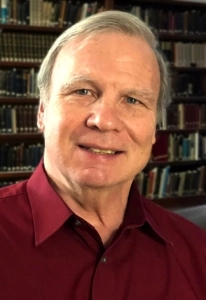 Gary Porter is the founder and former Executive Director of the Constitution Leadership Initiative (CLI), a project to promote a better understanding of the U.S. Constitution by the American people. Gary presents talks on various Constitutional topics, writes periodic essays published on several different websites, and appears in period costume as James Madison, explaining to public and private school students “his” (i.e., Madison’s) role in the creation of the Bill of Rights and the Constitution. In 2023, Gary served as chair of the Virginia Delegation in a simulated Article V Convention of the States held in Williamsburg, Virginia. Gary can be reached at constitutionlead@gmail.com.
Click here to receive our Daily 90-Day Study Essay emailed directly to your inbox.
Click here for the essay schedule with today’s essay and previously published essays hyperlinked.


Join the discussion! Post your comments below.
Your feedback and insights are welcome.Feel free to contribute!