

Essay Read by Constituting America Founder, Actress Janine Turner
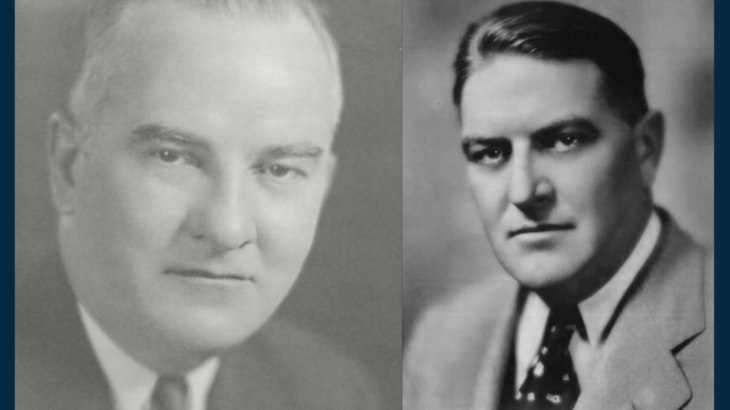
In Topeka, Kansas, there is a full-sized statue of Harry W. Colmery, the father of the G.I. Bill. Even more surprising, an entire plaza is dedicated to Colmery and the critical role he and his fellow American Legion leader, John Stelle, played in creating one of the most consequential pieces of legislation in American history.
As a result of the G.I. Bill, millions of veterans have earned college degrees, built careers, purchased homes, and improved the lives of their families because of the vision and persistence of these two men. If the G.I. Bill changed the trajectory of the United States, then Colmery and Stelle helped change the trajectory of generations of Americans.
As World War II neared its end, the nation faced a challenge unlike any it had encountered before. Millions of service members would soon return home from Europe, the Pacific, and other theaters of war. The question was not whether they deserved gratitude. The question was what that gratitude should look like.
Harry W. Colmery (1890-1974) was more than an attorney from Topeka. He was a decorated World War I veteran who had served in the U.S. Army, returned home to practice law, and had later served as National Commander of the American Legion from 1936 to 1937. Having witnessed firsthand the challenges veterans faced after World War I, he believed the nation owed returning service members more than a handshake and a thank you. Determined not to repeat those mistakes, Colmery envisioned a program that would provide opportunity rather than charity.
John Stelle (1894-1975) also brought personal experience to the effort. A World War I veteran, successful Illinois farmer and businessman, and governor of Illinois from 1941 to 1945, Stelle devoted much of his public life to improving the welfare of veterans through the American Legion. While Colmery helped define the vision, Stelle became one of its strongest advocates, building the political support necessary to transform it into law. Together, they demonstrated a timeless leadership lesson: meaningful change requires both vision and execution.
Their efforts culminated in the Servicemen’s Readjustment Act, signed into law by President Franklin D. Roosevelt on June 22, 1944, better known as the G.I. Bill. Few could have predicted its impact.
Millions of veterans who never would have considered college suddenly had access to higher education. Universities expanded. Professional opportunities multiplied. Families who had never imagined sending a son or daughter to college became part of a growing American middle class.
The G.I. Bill did far more than educate veterans. It transformed communities, strengthened the workforce, fueled economic growth, and helped create one of the most prosperous periods in American history. The benefits extended far beyond the veterans themselves. Children and grandchildren of G.I. Bill recipients often became the first members of their families to attend college, creating opportunities that continued for generations.
Over time, however, the educational benefits available to veterans gradually diminished. Veterans of Korea, Vietnam, and the Cold War still received assistance, but the relative value of those benefits declined. By the early twenty-first century, many believed the nation had drifted from the original vision established by Colmery and Stelle.
Following the attacks of September 11, 2001, the nation once again faced the question of what it owed those who served. Repeated deployments, lengthy separations from family, and sustained combat operations highlighted the need for renewed support.
The Post-9/11 G.I. Bill, signed into law on June 30, 2008, represented a return to the principles that guided the original legislation. Tuition assistance, housing support, and educational benefits once again opened doors for hundreds of thousands of veterans. The Harry W. Colmery Veterans Educational Assistance Act, signed on August 16, 2017, further strengthened that commitment. It is fitting that Colmery’s name is attached to the legislation. More than seventy years after helping create the original G.I. Bill, his vision continues to shape how America supports those who serve.
The Topeka plaza stands in the hometown of a man whose vision, together with John Stelle’s leadership, significantly changed the lives of millions of veterans for more than eighty years.
Every veteran who has walked across a college graduation stage using the G.I. Bill, every family whose future changed because of that education, and every community strengthened by their service owes a measure of gratitude to Harry Colmery and John Stelle. Their names may not be widely known, but their legacy lives on in millions of American lives.
 Jack Briggs is the Assistant Vice Chancellor for Public Safety Operations within the Division of Public Safety. Operations under Jack’s leadership consist of Events & Emergency Management, Flight Operations and the Security Operations and Communications Centers.
Jack most recently served as the President & CEO for Springs Rescue Mission, southern Colorado’s largest homeless shelter and addiction recovery program. Prior to his time at Springs Rescue Mission, Jack was Vice President for Global Resiliency and Security at New York University (NYU). He was responsible for organizing, integrating, and executing the University’s Emergency Management and Continuity Programs and security for NYU’s 15 campuses in 11 countries. While at NYU, Jack earned his Doctorate in Education Leadership and Innovation.
Before NYU, Jack served in the U.S. Air Force for more than 30 years in a variety of senior leadership roles retiring as a Major General. Jack’s career began in the US Air Force, where he spent over 30 years as a fighter pilot, eventually rising to the rank of Major General. As the Director of Operations for US NORTHERN Command in Colorado Springs, Jack was responsible for the defense of North America and managed Department of Defense efforts in national emergencies.
Click here to receive our Daily 90-Day Study Essay emailed directly to your inbox.
Click here for the essay schedule with today’s essay and previously published essays hyperlinked.