
Essay 30-B: The Twenty-Sixth Amendment and Jennings Randolph
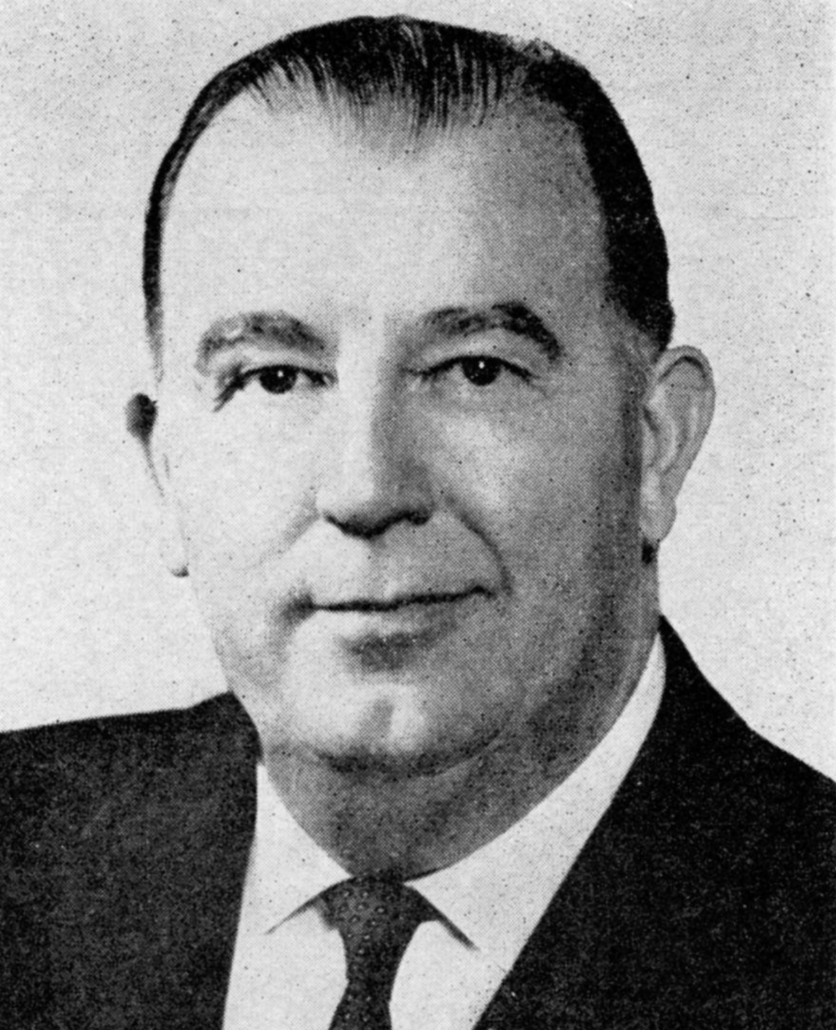

Essay Read by Constituting America Founder, Actress Janine Turner
Jennings Randolph’s long public life offers an important window into one of the Declaration of Independence’s most enduring principles: government by consent.
Born in Salem, West Virginia, on March 8, 1902, Randolph grew up in a state where public service, education, and community life were deeply connected. He attended Salem College, worked as a reporter and editor, and later taught public speaking and journalism at Davis & Elkins College. Before he became nationally known as a senator, he was a teacher, communicator, and civic leader—experiences that shaped his belief that citizens should be prepared to participate in public life.
Randolph first ran for Congress in 1930 at age twenty-eight and narrowly lost. Two years later, he won election to the U.S. House of Representatives during Franklin Roosevelt’s first presidential campaign. He served in the House from 1933 to 1947, returned to private life after losing reelection, and later worked in public relations for Capital Airlines. In 1958, he was elected to the United States Senate from West Virginia, where he served until 1985.
Across those decades, Randolph worked on many issues affecting his state and country. As chairman of the Senate Public Works Committee, he supported highways, infrastructure, and regional development, including the Appalachian Regional Development Act. He also supported legislation involving clean air, clean water, vocational education, assistance for disabled Americans, and help for workers suffering from black lung disease.
But Randolph is best remembered for his persistent advocacy for lowering the voting age from twenty-one to eighteen.
The argument was simple and powerful: young Americans who were old enough to serve their country in uniform should be old enough to vote for the leaders who made decisions of war and peace. During World War II, Korea, and especially Vietnam, this argument became widely known as “old enough to fight, old enough to vote.”
Randolph did not merely repeat the slogan. He acted on it. In 1942, during World War II, he introduced a constitutional amendment in the House to lower the voting age to eighteen. He continued to press the idea for nearly three decades. By one account, he sponsored such an amendment eleven times before finally succeeding in 1971.
That persistence matters. Randolph’s career shows how constitutional change can occur in a republic: not by abandoning the system, but by using its lawful processes. The Constitution provides an amendment process precisely because the Founders knew future generations would face questions they could not fully anticipate. Randolph’s work on youth voting rights demonstrates the American system’s capacity for peaceful correction and expansion of rights.
The Twenty-Sixth Amendment was approved by Congress on March 23, 1971, and ratified by the states on July 1 of that year. It was the fastest constitutional amendment to be ratified in American history. Its language was brief, but its meaning was significant: “The right of citizens of the United States, who are eighteen years of age or older, to vote shall not be denied or abridged” on account of age.
For students learning about the Declaration of Independence, Randolph’s story is especially relevant. The Declaration states that governments derive “their just powers from the consent of the governed.” That phrase means that legitimate government rests on the participation and approval of the people. Voting is not the only form of consent, but it is one of the most visible and important.
Before the Twenty-Sixth Amendment, millions of eighteen, nineteen, and twenty-year-old Americans could be drafted, taxed, prosecuted as adults, and asked to bear adult responsibilities. Yet, in many states, they could not vote. Randolph believed that this was inconsistent with the principle of consent. If young adults could be asked to serve the nation, they should have a voice in selecting its leaders.
The amendment did not settle every debate about citizenship, civic duty, or voting. But it expanded the circle of democratic participation and deepened the meaning of consent in American government.
Jennings Randolph’s biography reminds us that constitutional principles are carried forward by people who see a gap between an American ideal and American practice and then work patiently to close it. He was not a revolutionary tearing down institutions. He was a legislator using constitutional means to make representative government more complete.
In that sense, Randolph’s legacy belongs not only to West Virginia or to the young voters enfranchised in 1971. It belongs to the larger American story: a nation founded on the principle that government is legitimate only when it rests upon the consent of the governed and a Constitution flexible enough to allow each generation to bring that principle more fully to life.

George Landrith is the President of Frontiers of Freedom Institute – a public policy think tank devoted to promoting freedom, the Constitution, the rule of law, a strong national defense, free markets, and individual liberty. Mr. Landrith is a graduate of the University of Virginia School of Law, where he was the Business Editor of the Virginia Journal of Law and Politics. He is admitted to the bar in Virginia and California and is also a member of the United States Supreme Court bar. As an adjunct professor at the George Mason School of Law, he taught constitutional law and appellate advocacy.
Click here to receive our Daily 90-Day Study Essay emailed directly to your inbox.
Click here for the essay schedule with today’s essay and previously published essays hyperlinked.


Join the discussion! Post your comments below.
Your feedback and insights are welcome.Feel free to contribute!