
Essay 22-B: The Battle Over The Versailles Treaty And Senator Henry Cabot Lodge

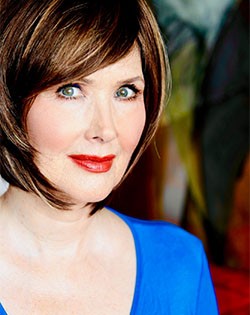
Essay Read by Constituting America Founder, Actress Janine Turner
Henry Cabot Lodge was a Boston Brahmin, considered something of a snob even in Brahmin society, where social snobbery was raised to a high art. He had a distinguished academic and literary career. A graduate of Harvard Law School and one of the first men awarded a Ph.D. in history and government at Harvard, he was editor of the prestigious North American Review in the 1870s and a lecturer in history at his alma mater.
As his resume indicated, Lodge was not a man of the people. But he entered politics in 1880 and, after a few early bumps, served in Congress for the last 37 years of his life.
When President Woodrow Wilson attempted to take the United States into the League of Nations as part of the Versailles Treaty ending World War I, Lodge opposed the treaty. He rested his argument against the treaty on defending the right of the American people, through their representatives in Congress, to determine questions of war and peace rather than an international organization.
Lodge, who had at first supported the idea of a League of Nations, represented the middle of the Republican Party. To his left were members who supported U.S. membership. To his right were true isolationists. Lodge was no isolationist. His preference was for a league of democracies in which the United States could be an active partner in hemming in Germany while remaking the map of Europe to promote democratic values. He was willing to accept American membership in a League of Nations—just not the one on which President Woodrow Wilson insisted.
The core of Lodge’s objections rested on Article X of the Versailles Treaty’s requirement to “guarantee the territorial integrity and the political independence of every member of the league.” Lodge argued that this guarantee took the power to decide questions of war and peace out of the hands of Congress and the American people and placed it with an international organization. Either the U.S. would be pulled into interminable wars, or it would leave the country in the position of failing to do something it had agreed by treaty to do. Neither was acceptable to Lodge.
As the debate began in late 1918, most Americans looked favorably on the League of Nations. Anything that promised “eternal preservation of the world’s peace,” as Lodge put it, looked good after the Great War. That, Lodge believed, was their first thought. He saw his task as educating the people about the dangers the League of Nations posed to American sovereignty, so their second thought would be something else.
In his initial Senate speech on the treaty, Lodge argued that Americans were being asked “to give up in part our sovereignty and independence and subject our will to the will of other nations.” He asked for time to consider a question of such importance. As Senate majority leader and chairman of the Foreign Relations Committee, he had the authority to provide that time.
He warned against abandoning George Washington’s advice against “entangling alliances,” and said the League would spell the end of the Monroe Doctrine, the essence of which was that “American questions shall be settled by Americans alone.”
Under the provisions of the treaty, the League of Nations itself would interpret the meaning of Article X. For Lodge, this was untenable. Interpretation of clauses that affected the United States, he argued, should be left “to the only people who can interpret it, the people of the United States.”
Wilson posited that Article X in the Treaty of Versailles created a moral responsibility for the United States to respond militarily when the League called for it, but not a legal one. For Lodge, as well as some League supporters, that was a distinction without meaning. “All international obligations are moral ones,” one pro-treaty senator said. Lodge could not imagine the United States failing to live up to a moral obligation, legal or otherwise.
The Foreign Relations Committee sent the Treaty of Versailles to the Senate floor with recommendations for four reservations and amendments. The most important reservation was on Article X that said “the United States assumes no obligation to preserve the territorial integrity or independence of any other country or to interfere in controversies between nations – whether members of the league or not – under the provisions of Article 10, or to employ the military or naval forces of the United States under any article of the treaty for any purpose” unless Congress acts to declare war.The Republicans were split over the treaty and the reservations. Therefore, some of the moderate Republicans joined with Democrats on the floor to defeat the treaty with the amendments.
Wilson had earlier insisted that votes by the league on military responses were merely advisory. Now, though, he contradicted his earlier assurances, calling the reservation “a rejection of the covenant.” And indeed it was. “From the beginning there was no doubt that a majority of the Senate would not accept Article X as it stood,” Lodge wrote. Wilson refused to negotiate any changes, and the Senate voted down the Treaty of Versailles again.
Defeat of the Treaty of Versailles lay at the feet of Woodrow Wilson, who refused to negotiate, compromise, or even listen to the objections of senators or the American people.
Lodge listened to the people while leading them. In doing so, he not only preserved American sovereignty, he helped the American people practice it.
 John Bicknell was a journalist for 30 years as a reporter, editor, columnist, and opinion writer in Florida and Washington, D.C. He is the author of three books – The Pathfinder and the President: John C. Fremont, Abraham Lincoln, and the Battle for Emancipation; Lincoln’s Pathfinder: John C. Fremont and the Violent Election of 1856; and America 1844: Religious Fervor, Westward Expansion, and the Presidential Election That Transformed the Nation – and was a senior editor of the 2016, 2018, 2020, and 2022 editions of The Almanac of American Politics. He lives in Moweaqua, Illinois.
Click here to receive our Daily 90-Day Study Essay emailed directly to your inbox.
Click here for the essay schedule with today’s essay and previously published essays hyperlinked.


Join the discussion! Post your comments below.
Your feedback and insights are welcome.Feel free to contribute!